
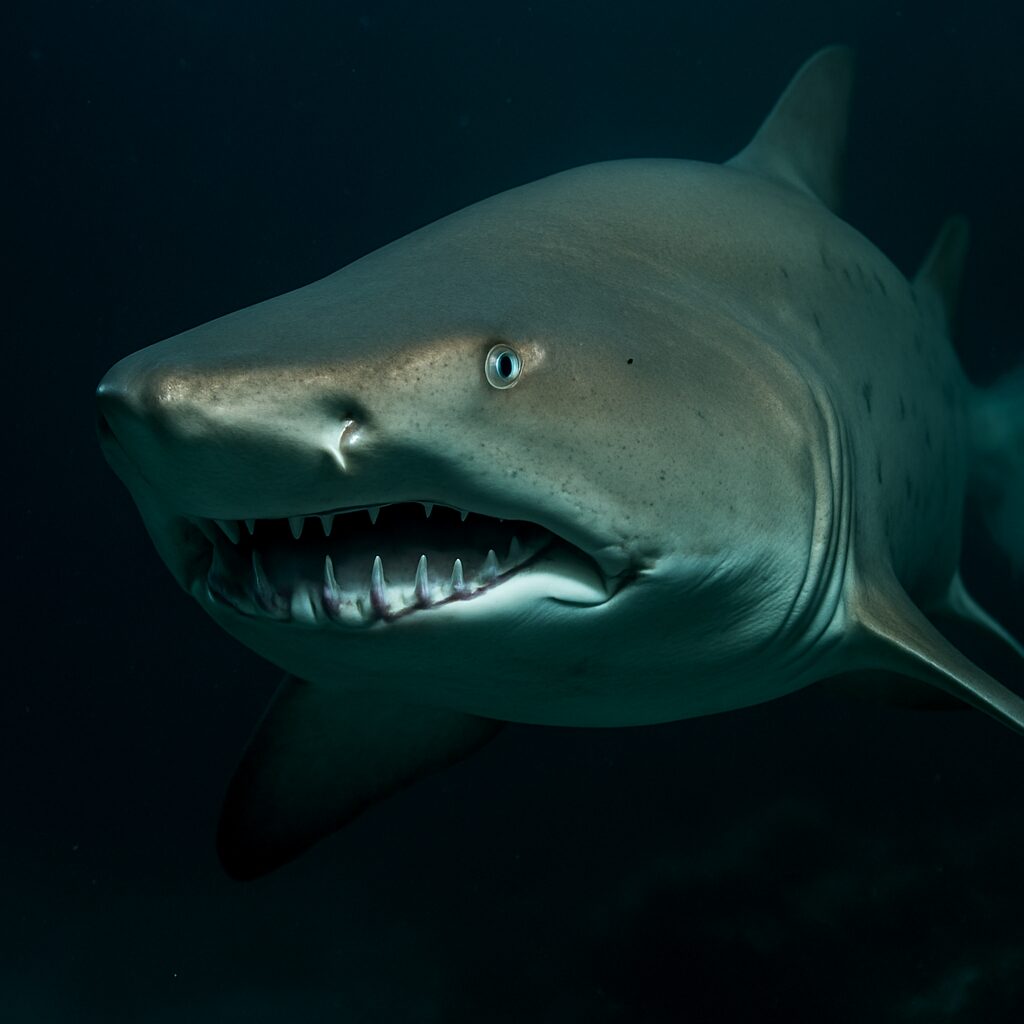
Ragged-tooth shark Protea Banks diving is one of the most reliable shark encounters in South Africa.
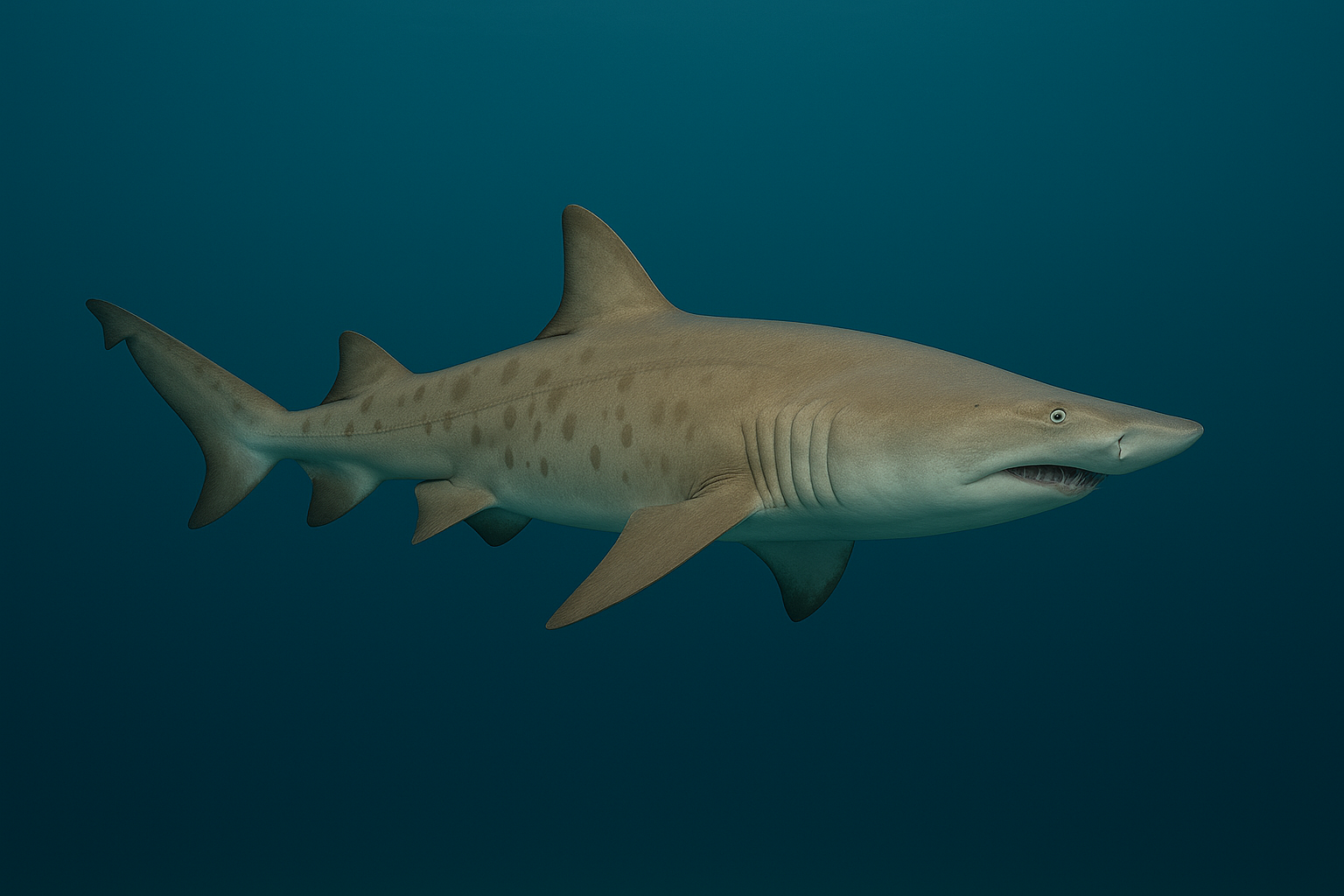
See a Ragged-Tooth Shark in 3D Before You Dive
Rotate a life-size ragged-tooth shark and explore it before your Protea Banks dive.
Drag to rotate the shark. Tap the blue AR button on supported mobile devices to place a life-size shark in your space.
This interactive shark experience is part of the African Dive Adventures™ platform.
WhatsApp to Check Availability →Known internationally as the sand tiger shark or grey nurse shark, the ragged-tooth shark is a true icon of South African diving — especially at Aliwal Shoal and Protea Banks.
This guide explains everything you need to know about ragged-tooth sharks in South Africa, where to see them, when to dive, and what it’s really like to encounter these remarkable animals.
What Is a Ragged-Tooth Shark?
The ragged-tooth shark (Carcharias taurus) is a large, slow-moving shark easily recognised by:
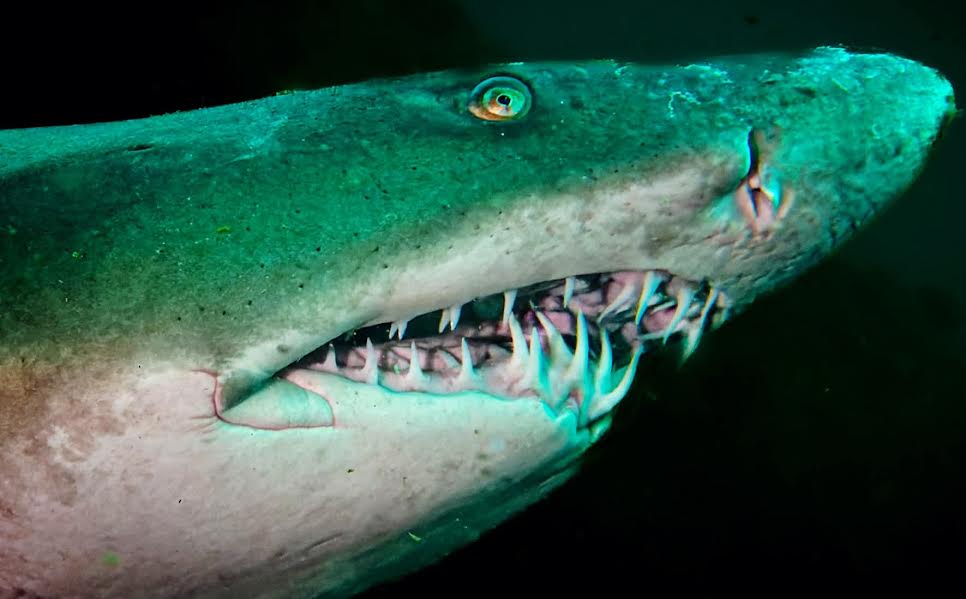
- Its long, needle-like teeth that stick out even when its mouth is closed
- A bulky body and blunt snout
- A calm, almost sleepy swimming style
- A slightly “prehistoric” appearance
They can grow to around 3.2 metres in length and are found in temperate and subtropical waters around the world.
Despite their fearsome look, ragged-tooth sharks are among the calmest large sharks divers will ever encounter.
Why Are They Called Ragged-Tooth Sharks?
In South Africa, the species is called the ragged-tooth shark because of its uneven, protruding teeth.
International names include:
- Sand tiger shark
- Grey nurse shark
All names refer to the same species.
Those teeth look terrifying — but they are used mainly for grabbing slippery fish, not for attacking large prey or people.
Where Are Ragged-Tooth Sharks Found in South Africa?
South Africa is one of the best places in the world to see ragged-tooth sharks reliably.
They are most famous at:
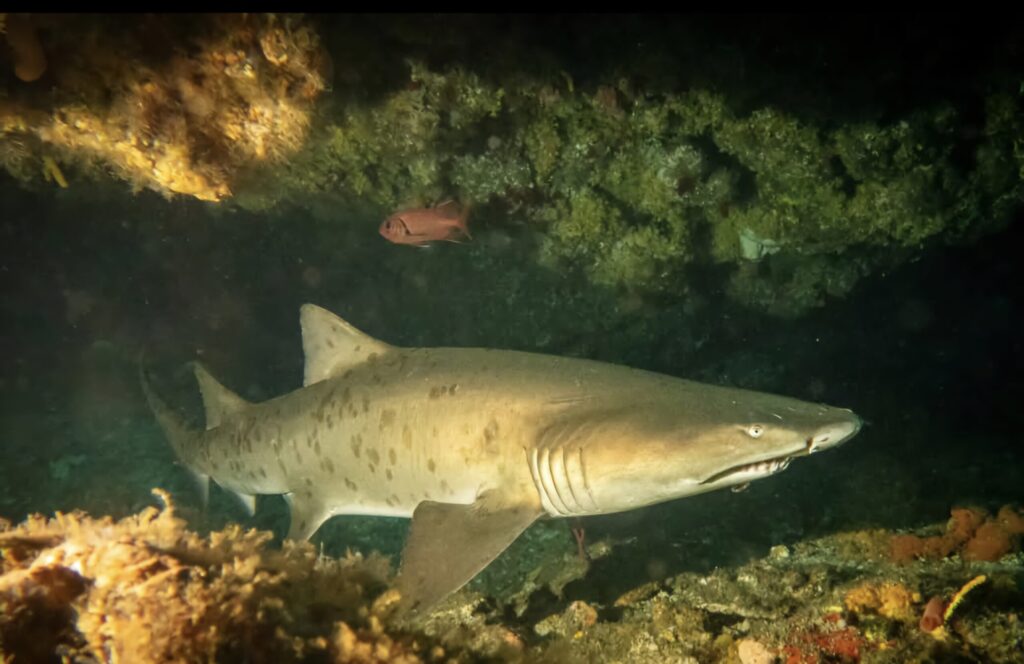
- Aliwal Shoal – especially in winter, when large numbers gather in caves and gullies
- Protea Banks – where they are seen year-round, though in smaller numbers
They prefer:
- Reef systems
- Caves and overhangs
- Cooler water compared to tiger and bull sharks
Ragged-Tooth Sharks at Aliwal Shoal and Protea Banks
Aliwal Shoal
Aliwal Shoal is world-renowned for ragged-tooth shark aggregations.
During the winter months:
- Dozens of raggies gather in specific caves
- Divers can see many sharks resting together
- The dives are calm, slow, and incredibly atmospheric
Protea Banks
At Protea Banks:
- Ragged-tooth sharks are usually seen in smaller numbers
- They often appear on reef dives alongside other shark species
- They form part of the broader big-shark ecosystem of the area
Best Time to See Ragged-Tooth Sharks
- Aliwal Shoal: Best from winter to early spring (roughly May to November)
- Protea Banks: Can be seen year-round, but not in the huge numbers seen at Aliwal
During winter, conditions are:
- Cooler
- Often very clear
- Ideal for photography and calm observation dives
Are Ragged-Tooth Sharks Dangerous?
Despite their terrifying teeth, ragged-tooth sharks are:
Among the least aggressive large sharks in the ocean.
They are:
- Slow-moving
- Calm
- Tolerant of divers
- Not known for attacking humans
In South Africa, thousands of dives are done with ragged-tooth sharks every year without incident.
They are:
- Protected species
- Treated with great care by operators
- A perfect example of why appearance does not equal danger
What It’s Like to Dive With Ragged-Tooth Sharks
Diving with ragged-tooth sharks is:
- Calm
- Peaceful
- Almost meditative
Divers often describe:
- Watching them hover motionless in caves
- Their slow, graceful movements
- The surreal feeling of being surrounded by sharks that seem completely uninterested in humans
This is one of the best shark dives in the world for photographers and less experienced divers.
Ragged-Tooth Shark Photography
Ragged-tooth sharks are:
- Extremely photogenic
- Slow and predictable
- Often found in dramatic cave and gully settings
They are ideal for:
- Wide-angle photography
- Close-up portraits
- Low-light, atmospheric shots
Because they move slowly, they are perfect subjects for divers still improving their photography skills.
Ragged-Tooth Sharks and the Sardine Run
Ragged-tooth sharks are not major participants in the Sardine Run feeding events.
They are:
- More reef- and cave-oriented
- Less involved in open-water bait balls
However, the same seasonal conditions that bring the Sardine Run:
- Also influence water temperature
- And shark movements along the coast
Frequently Asked Questions About Ragged-Tooth Sharks
Are ragged-tooth sharks aggressive?
No. They are among the calmest and least aggressive large sharks.
Why do they look so scary if they’re harmless?
Their teeth are designed to grab fish, not to bite large animals.
Can beginner divers dive with ragged-tooth sharks?
Yes — especially at Aliwal Shoal, under proper supervision.
Are ragged-tooth sharks protected?
Yes. They are a protected species in South Africa.
Where is the best place to see them?
Aliwal Shoal is world-famous for ragged-tooth shark dives.
Dive With Ragged-Tooth Sharks in South Africa
South Africa is one of the best places on Earth to dive with ragged-tooth sharks.
Whether you visit Aliwal Shoal for their famous winter aggregations or see them as part of the wider Protea Banks ecosystem, these gentle giants are an unforgettable experience.
While diving at Protea Banks, encounters are not limited to just this species. Divers regularly see tiger sharks, bull sharks, and hammerhead sharks, depending on conditions and season.
