
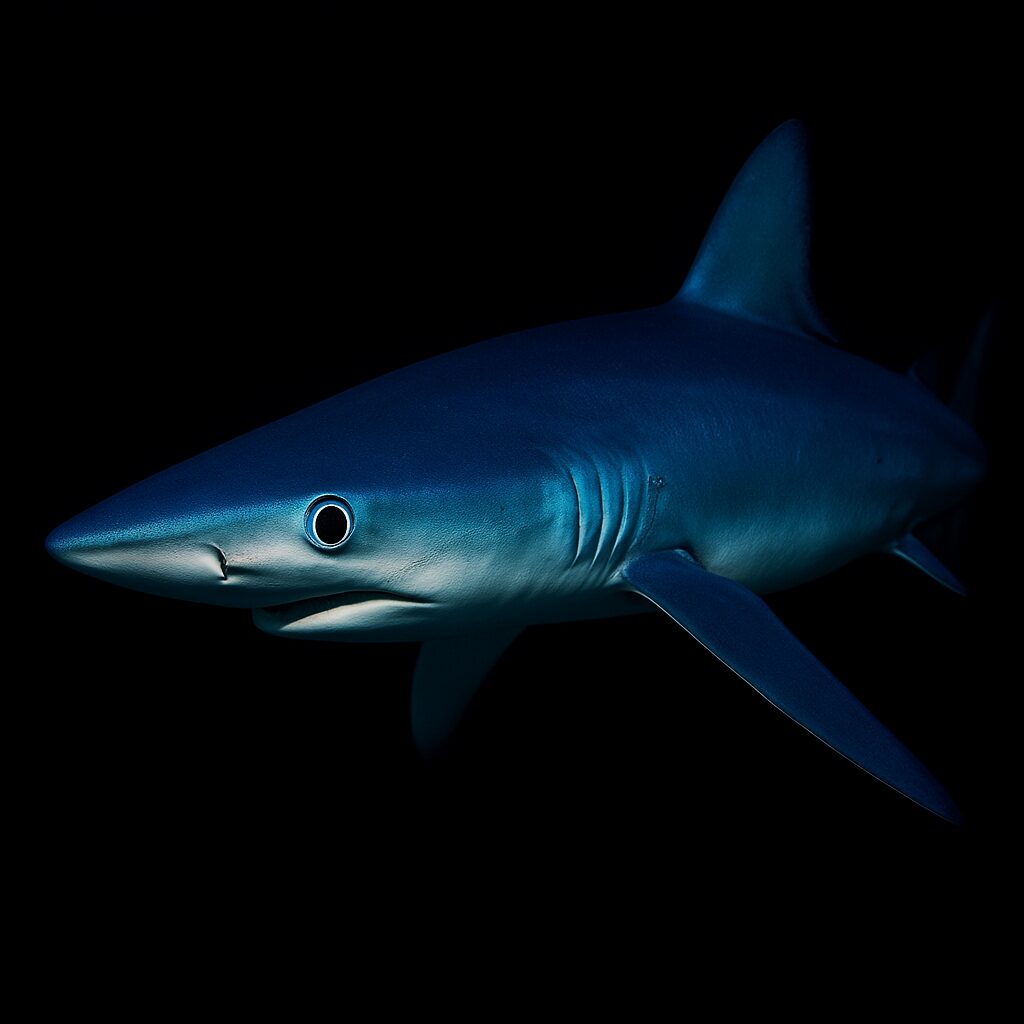
Blue shark Diving South Africa as seen on Protea Banks
See a Blue Shark in 3D Before You Dive
Rotate a life-size blue shark and explore it before your Protea Banks dive. Designed for offshore pelagic shark encounters beyond the reef.
Drag to rotate the shark. Tap the blue AR button on supported mobile devices to place a life-size shark in your room/space.
Can You Dive with Blue Sharks at Protea Banks?
While blue sharks are not normally encountered on standard Protea Banks reef dives, they can be seen on specialised offshore baited dives. These dives are conducted well beyond the reef into deeper open ocean water, where pelagic sharks are more likely to appear.
Blue shark baited dives require additional planning and are typically arranged on request. The dive involves travelling past the Protea Banks reef system into deep blue water and using a significant amount of bait to attract sharks up from the depths.
Because of the offshore location, fuel costs, bait preparation, and time involved, these dives are more expensive than standard reef dives. However, they offer a completely different experience — open ocean, deep water, and the chance to encounter one of the ocean’s most elegant pelagic sharks in its natural environment.
Encounters are never guaranteed, but when conditions align, a blue shark dive can be one of the most memorable and unique shark experiences available along the South African coast.
👉 Interested in a Blue Shark offshore experience? Contact the dive team to check availability and conditions.
Blue sharks are among the most elegant and wide-ranging sharks in the ocean. With their deep blue colour, long streamlined bodies, and effortless swimming style, they are true open-ocean predators and a favourite of pelagic divers and photographers.
While not as commonly seen as reef-associated sharks, blue sharks are occasionally encountered in deep offshore waters off South Africa — especially during pelagic trips and offshore expeditions connected to areas like Protea Banks.
This guide explains what blue sharks are, where to see them in South Africa, and what it’s like to encounter one of the ocean’s most beautiful pelagic sharks.
What Is a Blue Shark?
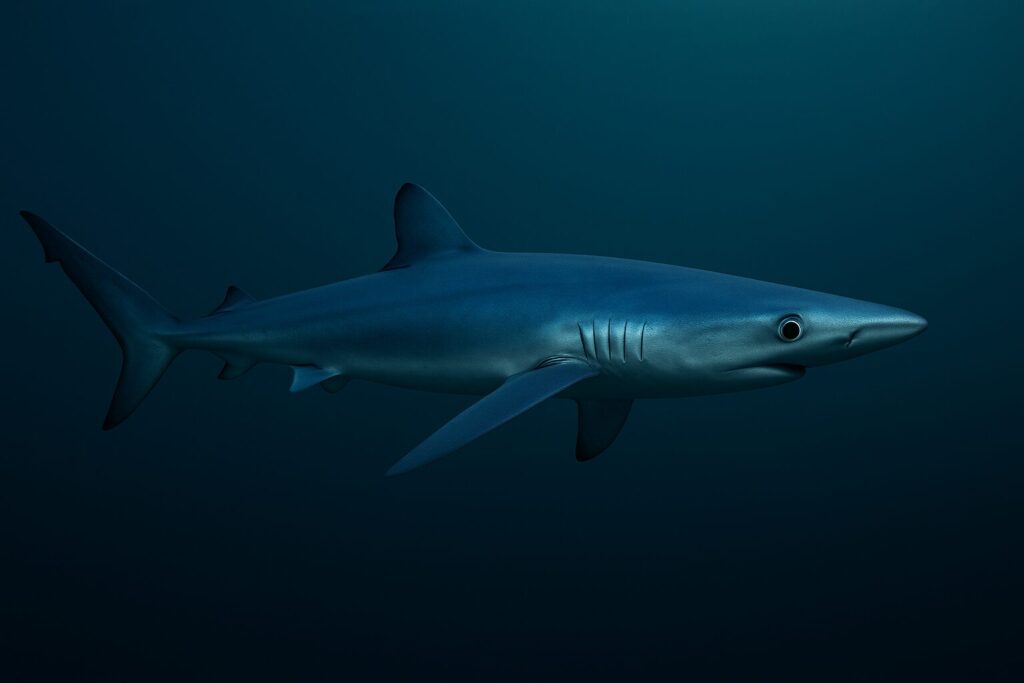
The blue shark (Prionace glauca) is a slender, fast-swimming shark built for life in the open ocean.
They are known for:
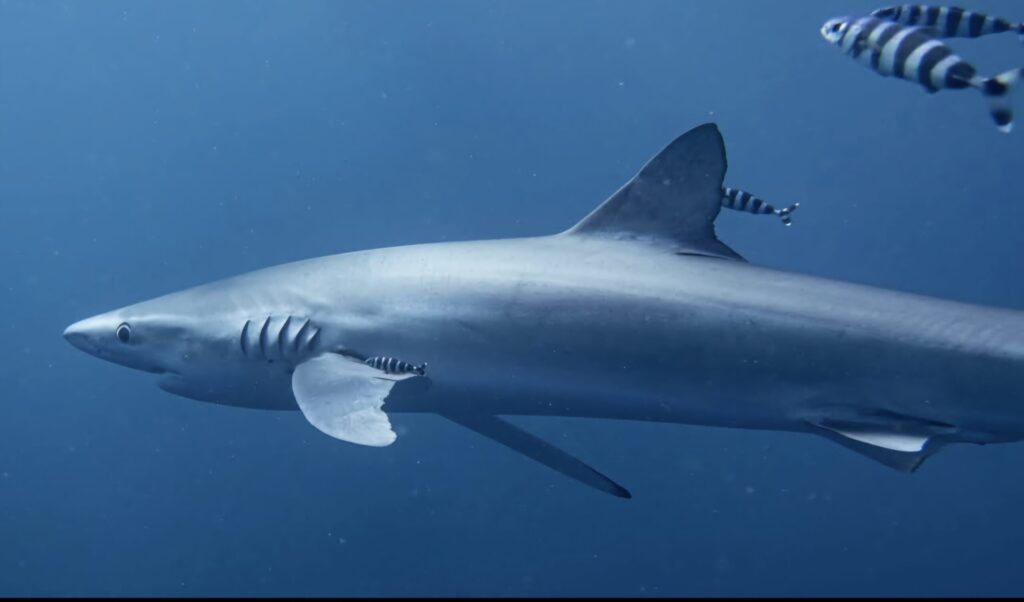
- Their deep blue upper body and pale underside
- Long, narrow pectoral fins
- Streamlined, hydrodynamic shape
- Constant, graceful swimming motion
Blue sharks can grow to around 3.8 metres in length and are one of the most widely distributed sharks in the world.
They are true pelagic animals, meaning they spend most of their lives far from reefs and coastlines in deep open water.
Where Are Blue Sharks Found in South Africa?
In South Africa, blue sharks are:
- Found in deep offshore waters
- Occasionally encountered on pelagic trips
- Sometimes seen far offshore from the KwaZulu-Natal coast
They are not a regular reef dive species like:
- Bull sharks
- Tiger sharks
- Ragged-tooth sharks
Instead, sightings usually happen:
- On dedicated offshore or pelagic expeditions
- In blue-water environments
- In areas influenced by major currents like the Agulhas Current
Blue Sharks and Protea Banks
Protea Banks lies close to deep ocean water and the edge of the continental shelf.
Because of this:
- Pelagic species like blue sharks sometimes pass through the region
- Most encounters happen farther offshore than standard reef dives
- Blue shark sightings are special, unpredictable bonuses
They are not a primary target species for Protea Banks diving, but they form part of the wider pelagic ecosystem of the region.
Best Time to See Blue Sharks
Blue sharks are:
- Highly migratory
- Influenced by:
- Water temperature
- Currents
- Prey movements
In South Africa:
- Sightings are irregular
- More likely during cooler-water periods or when pelagic conditions are favourable
- Often associated with offshore expeditions rather than normal reef dives
Because of their pelagic nature, blue shark encounters are:
Always a bonus, never guaranteed.
Are Blue Sharks Dangerous?
Blue sharks are:
- Generally curious but not aggressive
- Slender and less bulky than bull or tiger sharks
- Known for investigating objects in the water
Most interactions with divers worldwide:
- Are calm
- Involve curious circling behaviour
- Do not involve threatening actions
As with all large marine animals:
- Respect
- Calm behaviour
- Professional procedures
…are essential.
What It’s Like to Dive With Blue Sharks
Diving with blue sharks is:
- Very different from reef shark diving
- Quiet
- Open
- Exposed
- And deeply atmospheric
There is:
- No reef
- No bottom
- Just blue water and the slow appearance of a shark from the deep
Divers often describe:
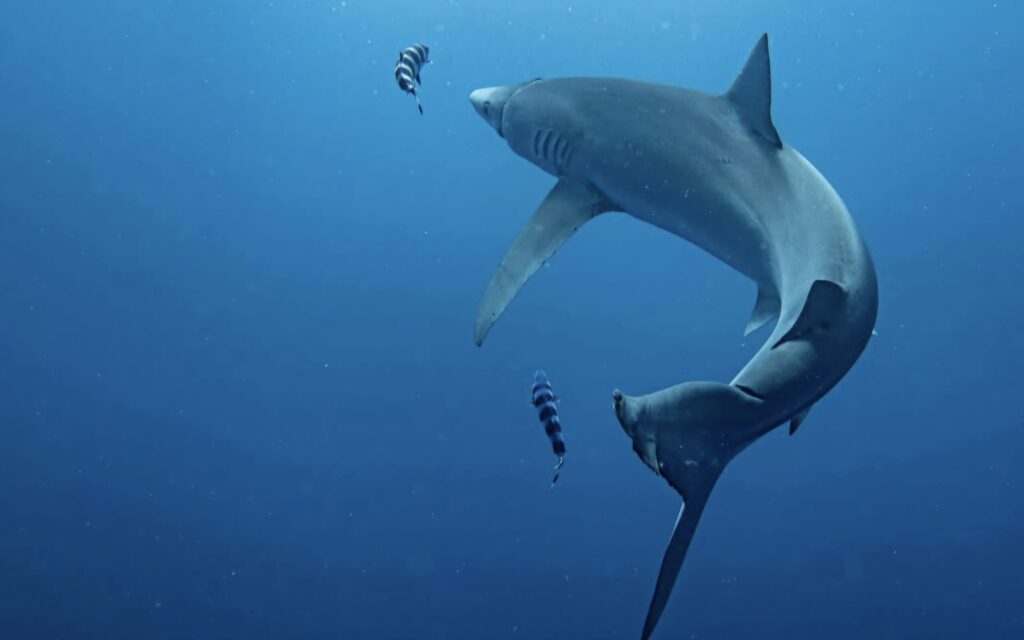
- The incredible colour of the shark against the blue water
- The graceful, endless cruising motion
- The surreal feeling of being suspended in open ocean with a true pelagic predator
Blue Shark Photography
Blue sharks are:
- Stunning photography subjects
- Extremely photogenic in clear blue water
- Ideal for:
- Wide-angle shots
- Silhouette images
- Natural-light compositions
Their colour and shape make them one of the most beautiful sharks to photograph in open water.
Blue Sharks and the Sardine Run
Blue sharks are not core participants in the Sardine Run feeding events.
However:
- The same oceanic systems that drive the Sardine Run
- Also influence pelagic shark movements
On rare occasions:
- Blue sharks may be present in the broader offshore region during this season
Frequently Asked Questions About Blue Sharks
How big do blue sharks get?
Up to around 3.8 metres in length.
Are blue sharks aggressive?
They are generally calm and curious, not aggressive toward divers.
Can you see them on normal Protea Banks dives?
No. They are usually encountered only on dedicated offshore or pelagic trips.
Are blue sharks common in South Africa?
They are present in offshore waters but are not commonly seen by recreational divers.
Are they dangerous?
No more than any large shark when treated with respect and proper procedures.
Dive With Blue Sharks in South Africa
Blue shark encounters in South Africa are rare, special, and unforgettable.
While they are not the main attraction of Protea Banks diving, they represent the wild, open-ocean side of South Africa’s shark ecosystem and are a reminder of how much life exists beyond the reefs.
👉 View Protea Banks & Pelagic Dive Opportunities
