

The Sardine Run Coffee Bay experience takes place each winter along South Africa’s Wild Coast…Every winter, something extraordinary happens along South Africa’s Wild Coast. Billions of sardines migrate northward in vast shoals, triggering one of the most spectacular wildlife events on Earth: the Sardine Run.
Interactive Sardine Run Wildlife in 3D & AR
Explore some of the incredible marine life associated with South Africa’s Sardine Run. Rotate each model in 3D, zoom in, and use AR on supported mobile devices to view dolphins, whales, sharks and seals in your own space.
Dolphin
Dolphins are one of the key animals associated with Sardine Run action, often linked with bait-ball feeding activity.
This 3D and AR viewer helps divers visualise some of the marine life linked to Sardine Run activity before travelling to the Wild Coast.
Our Sardine Run expeditions are based in Coffee Bay on South Africa’s Wild Coast (Eastern Cape) and operated by Dive In Adventure Tours. Each day we launch to track real-time dolphin, gannet and bait ball activity along the migration corridor — because the Sardine Run is wild, mobile, and never guaranteed.
Often compared to the great migrations of Africa’s savannah, the Sardine Run is a marine feeding frenzy on a colossal scale, attracting dolphins, sharks, whales, seals, and thousands of seabirds into a dynamic, fast-moving natural drama.
For divers, snorkellers, and wildlife photographers, the Sardine Run represents one of the most intense and unpredictable ocean experiences on the planet. It is not a scheduled “tourist attraction” — it is a raw, wild natural phenomenon that unfolds differently every year, guided by ocean currents, temperature, and the movement of the sardines themselves.
Witnessing the Sardine Run is not just about seeing fish. It is about being present at one of nature’s great events, where predator and prey interactions play out on an epic scale in open water.
Ready to Experience the Sardine Run Coffee Bay?
Join our expedition-style Sardine Run trips from Coffee Bay on South Africa’s Wild Coast. Small groups, experienced crews, and real-time tracking of dolphins, sharks and bait balls.
What Is the Sardine Run?
The Sardine Run is an annual migration in which massive shoals of sardines move up the east coast of South Africa, usually during the Southern Hemisphere winter.
As the sardines travel north, they are pursued by an extraordinary concentration of predators, including:
- Common dolphins
- Bottlenose dolphins
- Sharks of many species
- Cape fur seals
- Game fish
- And huge numbers of seabirds, especially gannets
At times, these predators work together to herd the sardines into dense bait balls, creating highly concentrated feeding events where the action can be explosive, chaotic, and incredibly fast-paced.
These bait balls are what make the Sardine Run so famous — and so unpredictable.

Why the Sardine Run Is So Famous
The Sardine Run is often described as “the greatest shoal on Earth” or “the greatest marine migration on the planet.” It is not just the number of fish that makes it special, but the scale and intensity of the predator activity that follows them.
Unlike many wildlife spectacles that happen in a fixed location, the Sardine Run is:
- Mobile
- Unpredictable
- Driven by ocean conditions
- Different every single year
Some days may produce hours of action. Other days may produce nothing at all. When it does happen, however, the encounters can be some of the most dramatic interactions ever seen underwater.
Because of its unpredictability, the Sardine Run is not a guaranteed “tick-box” experience — it is a true expedition-style wildlife adventure.
What Animals Can You See During the Sardine Run?
The Sardine Run is not about one species — it is about the entire marine food chain in action.
Commonly encountered animals include:
- Thousands of common dolphins working in coordinated hunting groups
- Sharks such as copper sharks, dusky sharks, and sometimes larger species
- Bryde’s whales and other whale species feeding on the shoals
- Cape gannets diving from the air in spectacular vertical plunges
- Seals and large predatory fish joining the feeding frenzy
For divers and snorkellers, the experience is less about static observation and more about being immersed in a constantly moving, evolving wildlife event.
How the Sardine Run Works in Practice
The Sardine Run is not something you “visit” in a fixed location. It is a moving, weather- and current-driven event that can appear and disappear over large stretches of coastline.
Each day typically involves:
- Launching early and searching offshore for bird activity, dolphins, or surface disturbances
- Following reports and observations from spotter planes, boats, and other operators
- Responding quickly when activity is located
- Entering the water for short, intense encounters around bait balls
Some days may produce multiple encounters. Other days may produce none at all. This uncertainty is part of what makes the Sardine Run a true expedition-style experience rather than a guaranteed sightseeing tour.

When Does the Sardine Run Happen?
The Sardine Run usually occurs during the Southern Hemisphere winter, most commonly between May and July, although the exact timing varies every year.
The migration is influenced by:
- Ocean temperature
- Currents and upwellings
- Weather patterns
- The movement of the sardines themselves
Some years the run is early. Some years it is late. Some years it is concentrated and intense, and other years it is more scattered and difficult to track.
For this reason, anyone planning a Sardine Run trip should allow multiple days on location to maximise their chances of witnessing the action.
Where Can You See the Sardine Run?
Sardine Run Migration Map – Coffee Bay & Wild Coast
Explore how the Sardine Run moves along South Africa’s Wild Coast from Coffee Bay and surrounding migration corridors. Tap or hover over hotspots to see key launch zones, predator areas and typical migration routes. Use the month selector to see how activity shifts through the season.

The Sardine Run is a natural migration and changes every year. This map shows typical movement patterns used for expedition planning.
The Sardine Run typically unfolds along the Wild Coast and the KwaZulu-Natal coastline, with activity often concentrated in certain regions depending on conditions.
Key areas commonly associated with Sardine Run expeditions include:
- The Wild Coast
- Areas south of Durban
- The South Coast of KwaZulu-Natal
Because the event is mobile, operators base themselves in areas that allow rapid access to multiple potential search zones rather than relying on a single fixed dive site.
Package 1 — Sardine Run Expedition (11 Days / 10 Nights)
- 5 boat days
- 1 day tour: Hole in the Wall
- All meals
- All transfers
- Price: R60,000 pp sharing / R68,000 pp single
Package 2 — Protea Banks + Sardine Run (14 Days / 13 Nights)
- Protea Banks: 3 reef dives + 1 baited dive
- Sardine Run: 5 boat days
- 1 day tour: Hole in the Wall
- All meals
- All transfers
- Price: R67,500 pp sharing / R76,000 pp single
Package 3 — Protea Banks + Sardine Run + Safari (17 Days / 16 Nights)
- Protea Banks: 3 reef dives + 1 baited dive
- Sardine Run: 5 boat days
- 1 day tour: Hole in the Wall
- Safari: 1 day safari + hippo boat trip + 1 night safari
- All meals
- All transfers
- Price: R78,000 pp sharing / R87,000 pp single
Who Is the Sardine Run For?
The Sardine Run is not beginner diving and not a casual sightseeing activity. It is best suited to:
- Confident, experienced divers and snorkellers
- Strong swimmers comfortable in open ocean
- Wildlife photographers and filmmakers
- Adventurous travellers who understand that nature cannot be scheduled
- People who are comfortable with uncertainty and expedition-style travel
Itineraries flex around weather and sardine movement — we plan each day to maximise sightings.
Because encounters can be fast-moving and conditions can change quickly, participants should be physically fit, calm in open water, and able to follow instructions precisely.
Conditions & Requirements for the Sardine Run
The Sardine Run takes place in open ocean, often far from sheltered reefs or calm bays. Conditions can include:
- Cold water
- Surface chop and swell
- Strong currents
- Long days on boats
- Rapid entries and exits
Participants usually need:
- Solid diving or snorkelling experience
- Good buoyancy and situational awareness
- Physical stamina
- The ability to follow briefings and instructions quickly
This is not a relaxed reef diving experience — it is dynamic, demanding, and intensely rewarding.

Safety & Ethics During the Sardine Run
The Sardine Run is one of the most intense wildlife events on Earth, and it must be approached with strict safety discipline and strong ethical standards.
Reputable operators follow procedures designed to:
- Keep participants safe in dynamic, unpredictable conditions
- Avoid interfering with wildlife behaviour
- Prevent overcrowding of bait balls
- Control entries and exits from the water
- Maintain clear communication between boats and participants
Divers and snorkellers are expected to:
- Follow instructions immediately
- Maintain awareness of their surroundings
- Avoid chasing animals or interfering with the action
- Respect that this is a natural feeding event, not a staged experience
Responsible operation is the only reason the Sardine Run remains both possible and sustainable as a tourism activity.
Planning a Sardine Run Trip
Planning a Sardine Run trip is very different from planning a normal dive holiday. Because the event is unpredictable and weather-dependent, flexibility is essential.
Good planning includes:
- Allowing multiple days on location
- Being prepared for days with no activity
- Choosing operators with strong local networks and experience
- Being flexible with daily schedules and launch times
Many travellers combine the Sardine Run with:
- Aliwal Shoal
- Protea Banks
- Other KwaZulu-Natal or South African wildlife experiences
This creates a balanced trip where even quiet Sardine Run days are still filled with excellent diving or safari experiences.
Dive the Sardine Run with Us
“Our Sardine Run launches operate from Coffee Bay (Wild Coast). Protea Banks dives are included only in our combination packages.”
View Protea Banks Packages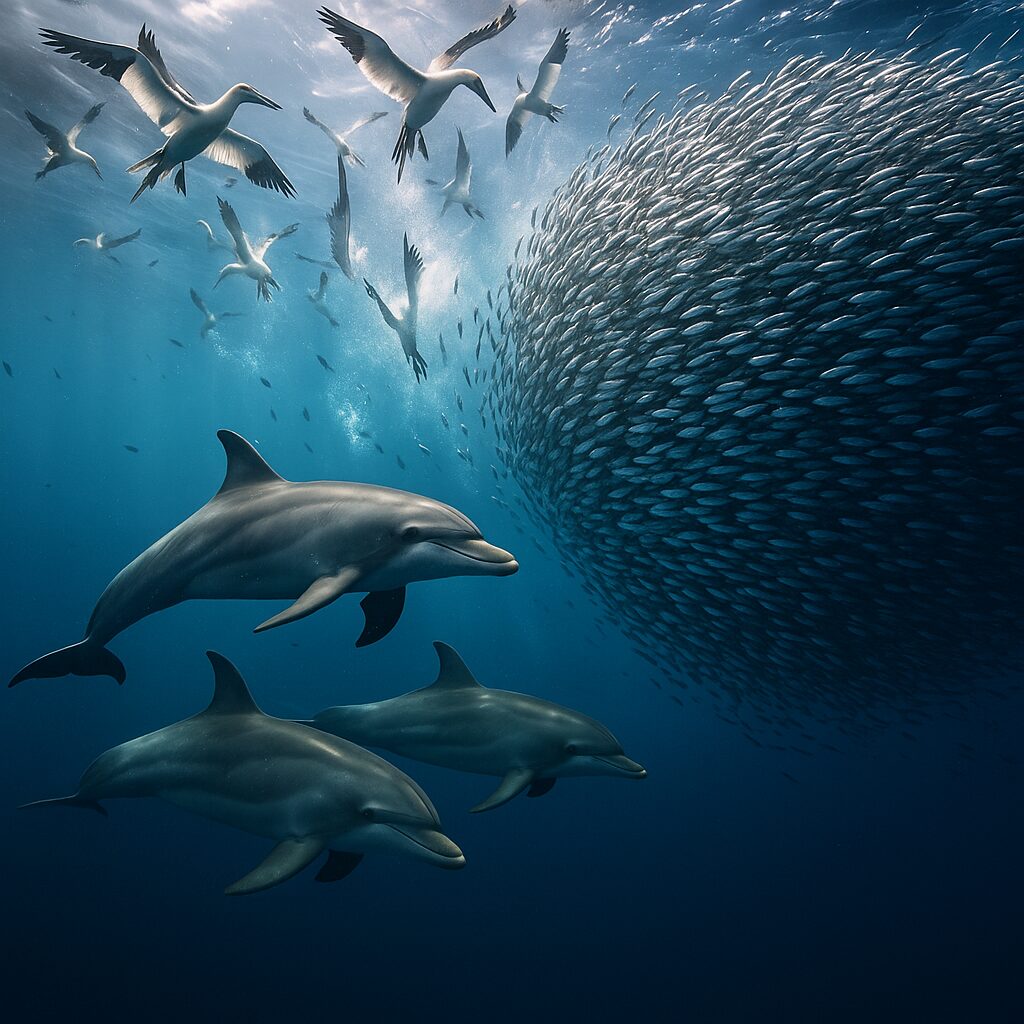
Sardine Run Packages
We offer expedition-style Sardine Run trips designed around maximising your chances of being in the right place at the right time, while maintaining safety and ethical standards.
Trips are typically built around:
- Multi-day search windows
- Flexible daily schedules
- Small groups
- Experienced crews and spotter networks
Because every Sardine Run season is different, trips are planned and adapted in real time rather than sold as rigid, guaranteed itineraries.
Why Experience the Sardine Run With Us
- Extensive experience operating Sardine Run expeditions
- Strong local networks and intelligence sharing
- Safety-first, conservative operational approach
- Small group sizes for better positioning and control
- Honest communication about conditions and expectations
We focus on doing the Sardine Run properly, not overselling an unpredictable natural event.
Start Planning Your Sardine Run Adventure
The Sardine Run is not a guaranteed spectacle — but when it happens, it is one of the most extraordinary wildlife experiences on Earth.
If you are looking for a true expedition-style ocean adventure and understand the nature of wild, unpredictable events, the Sardine Run belongs at the very top of your list.
- Shark Diving & Sardine Run Expeditions
- Sardine Run – What You Can Encounter
- Best Time for the Sardine Run
Ready to Experience the Sardine Run Coffee Bay?
Join our expedition-style Sardine Run trips from Coffee Bay on South Africa’s Wild Coast. Small groups, experienced crews, and real-time tracking of dolphins, sharks and bait balls.
