
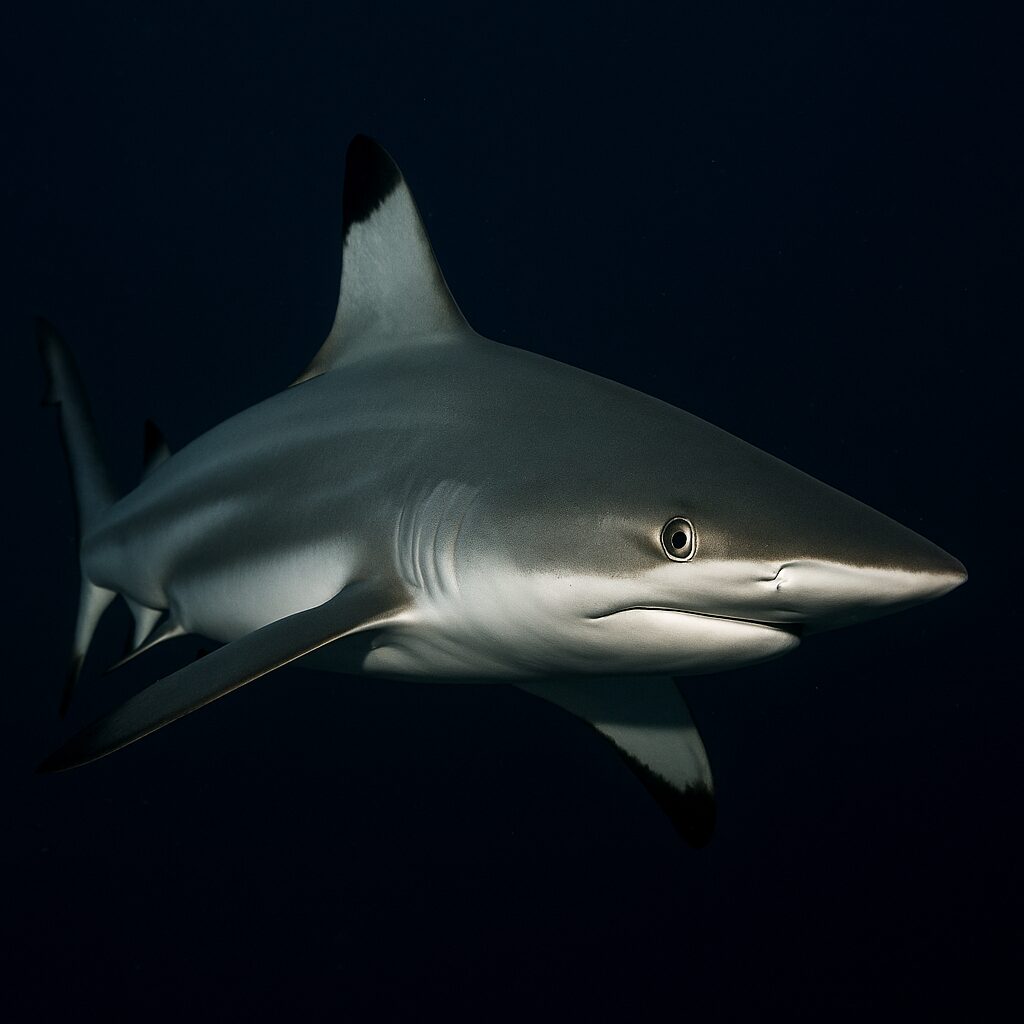
Blacktip shark diving Protea Banks South Africa offers one of the most exciting shark encounters for divers. Fast, agile, and often seen in large numbers, blacktip sharks bring constant movement and energy to the reef — both at Protea Banks and during the Sardine Run.
See a Blacktip Shark in 3D Before You Dive
Rotate a life-size blacktip shark and explore it before your Protea Banks dive.
Drag to rotate the shark. Tap the blue AR button on supported mobile devices to place a life-size shark in your room/space.
Rotate the blacktip shark model to explore it in 3D or tap AR to place a life-size shark in your environment.
This interactive shark experience is part of the African Dive Adventures™ platform.
WhatsApp to Check Availability →While they are smaller than tiger or bull sharks, blacktips more than make up for it with speed, energy, and sheer spectacle. They are frequently involved in high-intensity hunting events and are one of the species most often seen in feeding frenzies. Blacktip shark diving Protea Banks is known for fast-paced, high-energy encounters with sharks often moving quickly through the water column.
This guide explains what blacktip sharks are, where to see them in South Africa, when to dive, and what it’s like to be in the water with these incredible hunters.
What Is a Blacktip Shark?
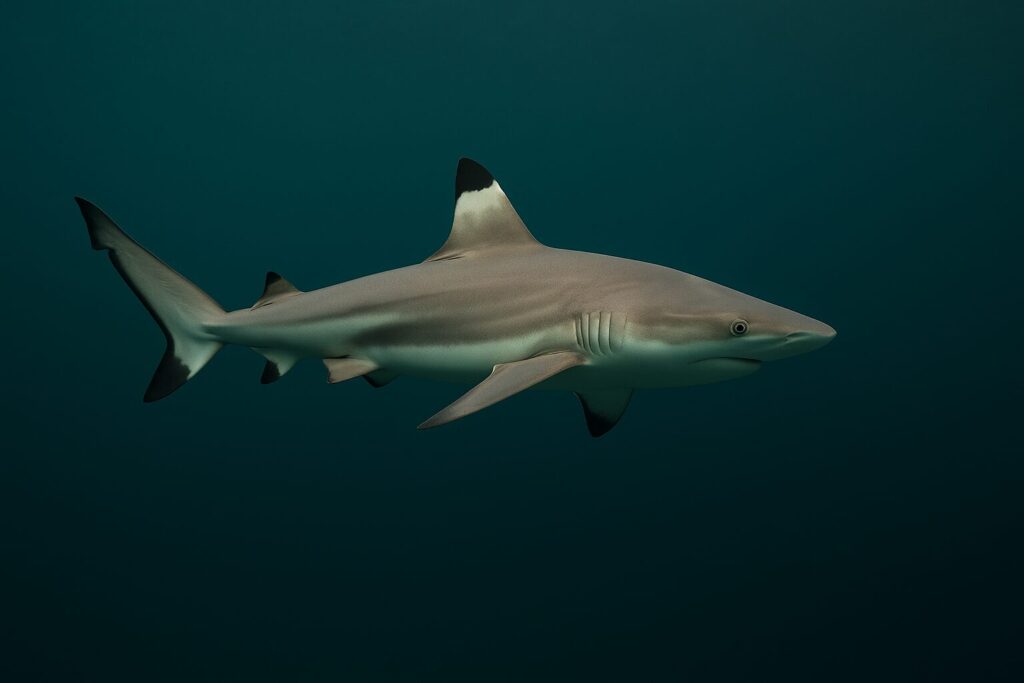
Several shark species are commonly referred to as “blacktips”, but in South African diving the most frequently encountered are:
- Blacktip shark (Carcharhinus limbatus)
- Blacktip reef shark (Carcharhinus melanopterus) (less common offshore)
They are characterised by:
- A streamlined, athletic body
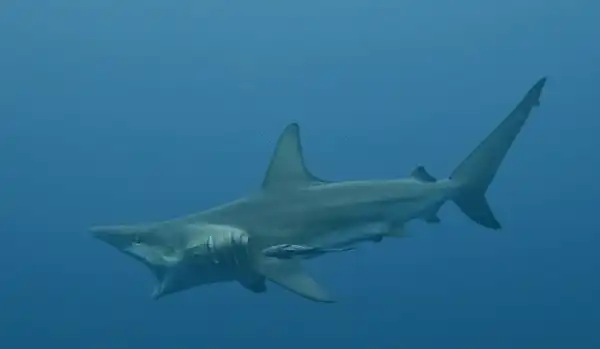
- Distinct black tips on the fins
- Fast, agile swimming style
- Highly alert, reactive behaviour
Blacktips typically grow to around 2 to 2.5 metres and are built for speed and hunting in open water.
Where Are Blacktip Sharks Found in South Africa?
Blacktip sharks are found primarily along the KwaZulu-Natal coast and are especially common in:
- Warm, subtropical waters
- Areas with large baitfish concentrations
- Offshore reefs and current lines
The two most famous places to see them are:
- Protea Banks
- Along the Sardine Run migration route
They are one of the most frequently encountered shark species in these regions.
Blacktip Sharks at Protea Banks
At Protea Banks, blacktips are:
- Common on many dives
- Often seen in groups
- Extremely active and fast-moving
- Sometimes part of mixed-species shark encounters
They are frequently seen:
- Circling reef edges
- Chasing fish
- Moving rapidly through the water column
Because of their speed and numbers, blacktip encounters often add energy and drama to dives — especially when larger sharks like bulls or tigers are also present.
Blacktip Sharks and the Sardine Run
Blacktip sharks are one of the main predator species of the Sardine Run.
When the sardines migrate:
- Blacktips gather in large numbers
- They hunt aggressively around bait balls
- They work alongside dolphins, game fish, and seabirds
During Sardine Run events, blacktips are often seen:
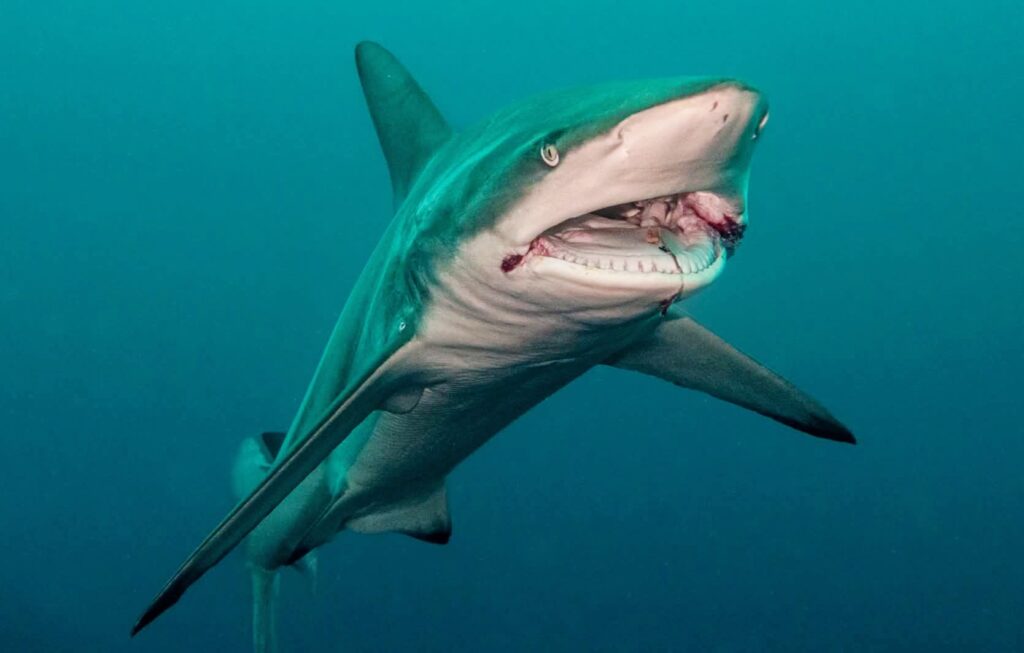
- Slashing through bait balls
- Chasing escaping sardines
- Moving at very high speed in chaotic feeding scenes
They are one of the species that makes the Sardine Run so fast, intense, and visually spectacular.
Best Time to See Blacktip Sharks
Blacktip sharks can be seen:
- At Protea Banks: almost year-round
- During the Sardine Run: in large numbers during winter
General patterns:
- Warmer months = more regular Protea Banks sightings
- Winter = peak Sardine Run action with large aggregations
They are one of the most reliable shark species for divers visiting this part of South Africa.
Are Blacktip Sharks Dangerous?
Blacktip sharks are:
- Fast
- Curious
- Energetic
But they are not considered highly dangerous to divers.
Most incidents worldwide involving blacktips:
- Occur in shallow water
- Involve fishing or surface activity
- Are cases of mistaken identity
On professional dive operations:
- Diver behaviour is controlled
- Feeding events are managed
- Risk is extremely low
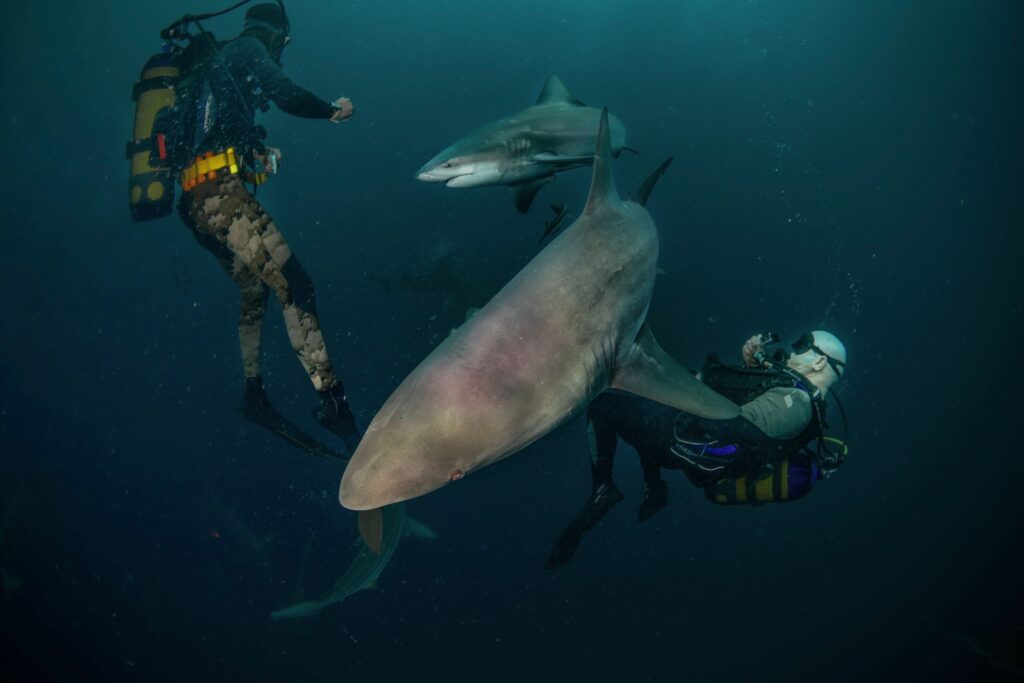
At Protea Banks and during Sardine Run diving, encounters are conducted under strict procedures and experienced supervision.
What It’s Like to Dive With Blacktip Sharks
Diving with blacktips is:
- Fast-paced
- Exciting
- Visually intense
Divers often describe:
- Sharks streaking past at high speed
- Sudden bursts of activity
- The feeling of being in the middle of a living, moving hunting system
Blacktips bring energy and motion to dives in a way that few other sharks do.
Blacktip Shark Photography
Blacktips are:
- Challenging to photograph
- Very fast-moving
- Often unpredictable
They are best photographed:
- During Sardine Run events
- When circling or moving repeatedly through an area
Fast shutter speeds and wide-angle lenses work best, and patience is essential.
Blacktip Sharks and Other Shark Species
Blacktips are often seen:
- With bull sharks
- With tiger sharks
- With oceanic species during Sardine Run events
They form part of a complex predator hierarchy, where:
- Larger sharks dominate
- Blacktips focus on speed, numbers, and rapid strikes
Frequently Asked Questions About Blacktip Sharks
How big do blacktip sharks get?
Usually around 2 to 2.5 metres.
Are blacktips aggressive?
They are energetic and fast but not typically aggressive toward divers.
Do you need baited dives to see them?
No. They are often seen naturally, especially during the Sardine Run.
What level of diver is required?
Advanced divers for Protea Banks and Sardine Run conditions.
Are they a main part of the Sardine Run?
Yes — they are one of the key predator species involved in feeding events.
Dive With Blacktip Sharks in South Africa
South Africa offers some of the best blacktip shark diving in the world, especially at Protea Banks and during the Sardine Run.
Whether you encounter them on reef dives or in full hunting mode during the migration, blacktips add speed, action, and excitement to every dive.
👉 View Protea Banks & Sardine Run Dive Packages
