
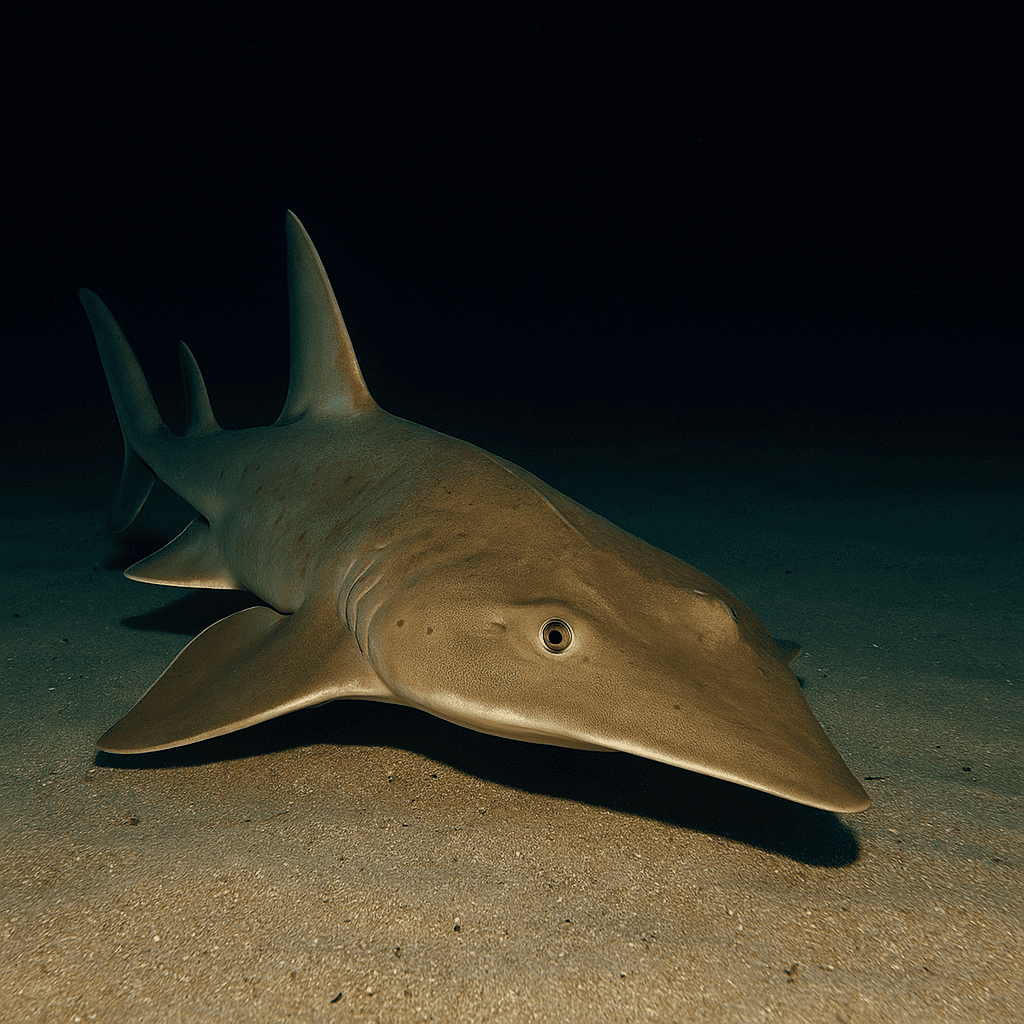
Guitar Shark Protea Banks sightings are one of the most unusual and memorable encounters divers can have in South Africa.
Locally, many divers refer to this unusual species as a guitar shark, although it is more accurately grouped with guitarfish and other shark-like rays.
See a Guitar Shark in 3D Before You Dive
Rotate a life-size Guitar Shark and explore it before your Protea Banks dive. In season, this unusual species is regularly seen resting on the sand at around 40 metres.
Drag to rotate the shark. Tap the blue AR button on supported mobile devices to place a life-size shark in your room/space.
Guitar sharks, more correctly known as guitarfish, are among the most unusual animals divers can encounter at Protea Banks in South Africa. Looking like a cross between a shark and a ray, they are perfectly adapted for life on sandy seabeds and reef edges.
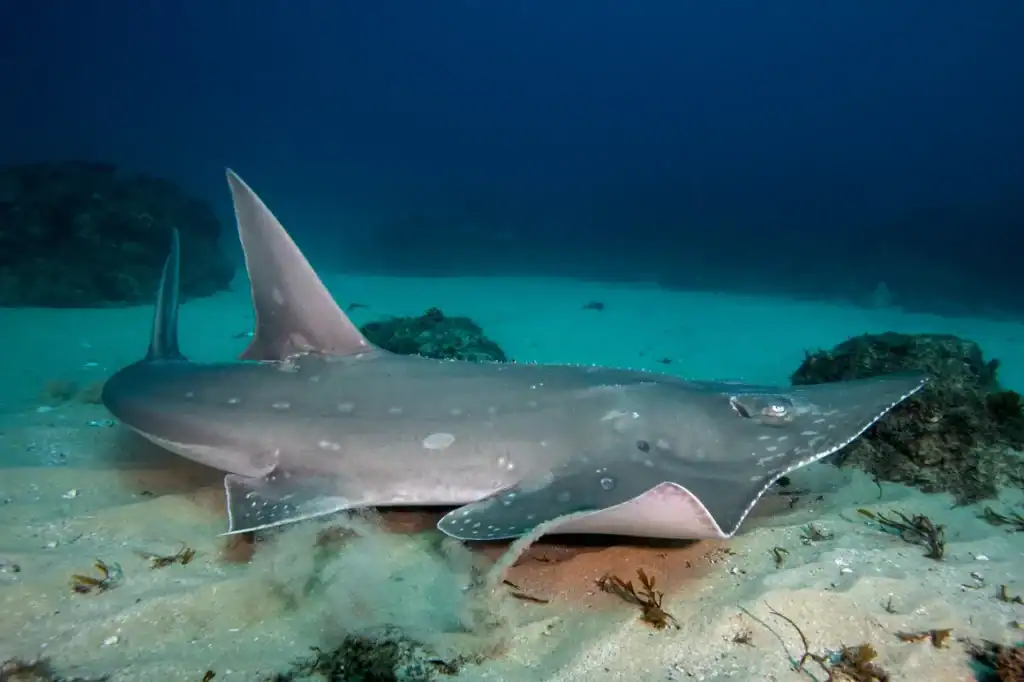
In season, guitar sharks are regularly seen resting on the sand at around 40 metres on Protea Banks. While not as famous as tiger sharks or bull sharks, they are a highly sought-after sighting and one of the reef’s most distinctive and memorable encounters.
This guide explains what guitar sharks are, why divers at Protea Banks value these sightings so highly, and what makes this unusual species such a special part of the wider South African shark-diving experience.
What Is a Guitar Shark (Guitarfish)?
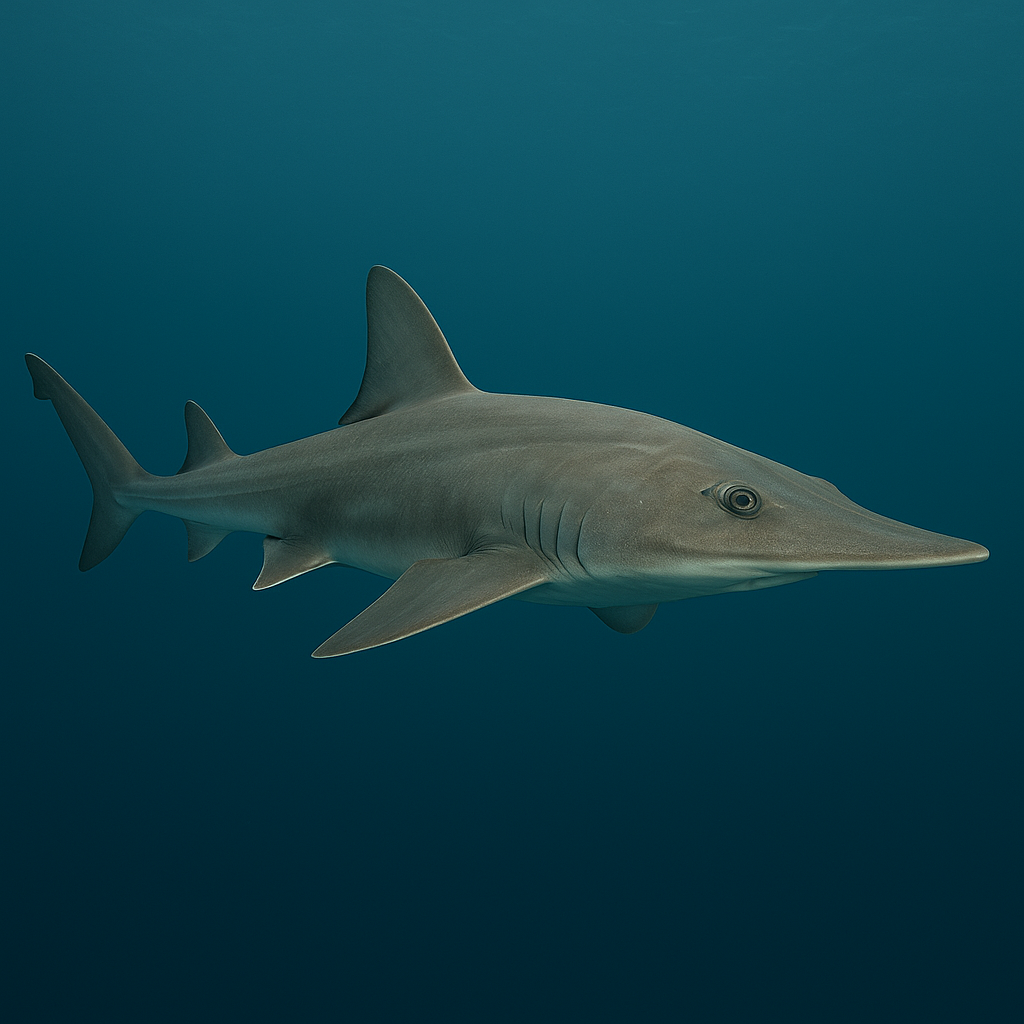
Guitar sharks are not true sharks. They are more accurately known as guitarfish, a group of shark-like rays more closely related to rays than to typical sharks.
They combine features of both:
- A flattened body and wing-like pectoral fins (like a ray)
- A shark-like tail and dorsal fins
- A pointed snout and streamlined shape
Common species in South Africa include:
- Bowmouth guitarfish
- Giant guitarfish (depending on region and classification)
They can grow to over 2.5 metres in length and are powerful but generally calm bottom-dwelling predators.
Why Are They Called Guitar Sharks?
They get their name because their body shape:
- Resembles a guitar when viewed from above
- Has a wide “body” tapering into a narrow “neck” and tail
Internationally, they are known as:
- Guitarfish
- Fiddler rays
- Shovelnose rays (in some regions)
All of these refer to the same group of animals.
Where Are Guitar Sharks Found in South Africa?
In South Africa, guitarfish are most commonly seen:
- Along the KwaZulu-Natal coast
- On sandy bottoms and reef edges
- In areas like Protea Banks
They prefer:
- Sandy or rubble substrates
- Areas where they can hunt bottom-dwelling fish and invertebrates
- Moderately deep water
They are not schooling animals and are usually seen:
- Alone
- Or occasionally in pairs
Guitar Sharks at Protea Banks
Because Protea Banks dives often include deep reefs, sand channels and mixed habitat, the site creates excellent conditions for spotting these unusual animals. Encounters are usually calm, natural and unhurried, making them especially rewarding for observant divers.
Many guitarfish and wedgefish species are globally threatened, which makes encounters with guitar sharks at Protea Banks especially memorable. Their presence is a reminder of how important healthy reef and sandy-bottom habitats are for rare shark-like rays in South African waters.
Encounters are:
- Natural
- Calm
- Unhurried
- And very rewarding for observant divers
Best Time to See Guitar Sharks
Guitar sharks can be seen at Protea Banks in season, and are regularly encountered resting on the sand at around 40 metres. Sightings depend on drift line, sand patches, visibility and overall conditions, so they are never guaranteed, but careful divers often spot them on deeper sandy sections of the reef. While habitat is often more important than season, good visibility and slow, observant diving can greatly improve your chances of seeing one.
They are:
- More dependent on habitat than season
- More likely to be seen on certain reefs and sand patches
Good visibility and slow, careful diving increase your chances of spotting one resting on the bottom.
Are Guitar Sharks Dangerous?
Guitar sharks are:
- Not aggressive
- Not interested in divers
- Bottom-focused predators
They feed mainly on:
- Small fish
- Crustaceans
- Bottom-dwelling invertebrates
If approached too closely, they may:
- Swim away
- Or suddenly burst off the sand in a cloud of dust
But they pose no real danger to divers.
Guitar Shark Photography
Guitarfish are:
- Excellent photography subjects
- Slow-moving
- Often resting on the bottom
They are ideal for:
- Natural-light photography
- Close-up detail shots
- Side-on profile images
Because they are well camouflaged, careful observation is often required to spot them in the first place.

Guitar Sharks and the Sardine Run
Guitar sharks are not active participants in Sardine Run feeding events.
They are:
- Bottom-dwelling
- Ambush-style hunters
- Not fast, open-water chasers like blacktips or dolphins
However, the same seasonal conditions that influence the Sardine Run:
- Also affect water temperature and marine life distribution
- Which can indirectly influence sightings
Frequently Asked Questions About Guitar Sharks
Are guitar sharks real sharks?
No. They are more closely related to rays, even though they look partly like sharks.
How big do guitarfish get?
Some species can exceed 2.5 metres in length.
Are they rare?
They are not common, but Protea Banks is one of the better places to see them in South Africa.
Are they dangerous?
No. They are calm, bottom-dwelling animals that pose no threat to divers.
Do they bite?
They feed on small bottom animals and are not interested in humans.
Dive With Guitar Sharks at Protea Banks
Protea Banks is one of the best places in South Africa to encounter guitarfish as part of a diverse and exciting big-animal dive experience.
While not the main attraction, seeing a guitar shark is always a special and memorable bonus on a Protea Banks dive.
