
Why Bull Sharks Protea Banks Are Famous
Protea Banks in South Africa is one of the best places in the world to dive with bull sharks (Carcharhinus leucas).
Bull sharks Protea Banks are among the most powerful and fascinating sharks encountered while diving in South Africa.

Explore a Bull Shark in 3D
Rotate the bull shark model to explore it in 3D or tap AR to place a life-size shark in your environment.
See a Bull Shark in 3D Before You Dive
Rotate a life-size bull shark and explore it before your Protea Banks dive.
Drag to rotate the shark. Tap the blue AR button on supported mobile devices to place a life-size shark in your room/space.
This interactive shark experience is part of the African Dive Adventures™ platform.
WhatsApp to Check Availability →To view life-size interactive models of these species,
visit the Protea Banks Shark AR experience on our main site.
Dive clubs are welcome to use this page as a pre-dive briefing tool.
Many BSAC and PADI instructors show these AR sharks before trips to
help divers recognise species they may encounter at Protea Banks.
While diving at Protea Banks, encounters are not limited to just this species. Divers regularly see tiger sharks, ragged-tooth sharks, and hammerhead sharks, depending on conditions and season.
The Bull sharks of Protea Banks are among the most powerful, adaptable, and misunderstood sharks in the ocean. Known locally in South Africa as Zambezi sharks, these formidable predators are famous for their strength, confidence, and ability to thrive in a wide range of environments.
South Africa — and especially Protea Banks — is one of the best places in the world to encounter bull sharks in their natural habitat. Here, warm currents, deep reefs, and seasonal marine events like the Sardine Run attract large numbers of these impressive sharks.
This guide explains everything you need to know about bull sharks in South Africa, where to see them, when to dive, and what it’s really like to share the water with one of the ocean’s top predators.
What Is a Bull Shark?
The bull shark (Carcharhinus leucas) is a large, robust shark species known for its:
- Stocky, muscular build
- Broad, blunt snout
- Powerful swimming style
- Confident, assertive behaviour
Bull sharks are unique among large sharks because they can tolerate freshwater as well as saltwater, and have been found far up rivers in many parts of the world.
They can reach lengths of over 3.5 metres and are among the strongest sharks relative to their size.
Protea Banks diving is widely regarded as one of the best places in the world to encounter bull sharks in their natural offshore environment.
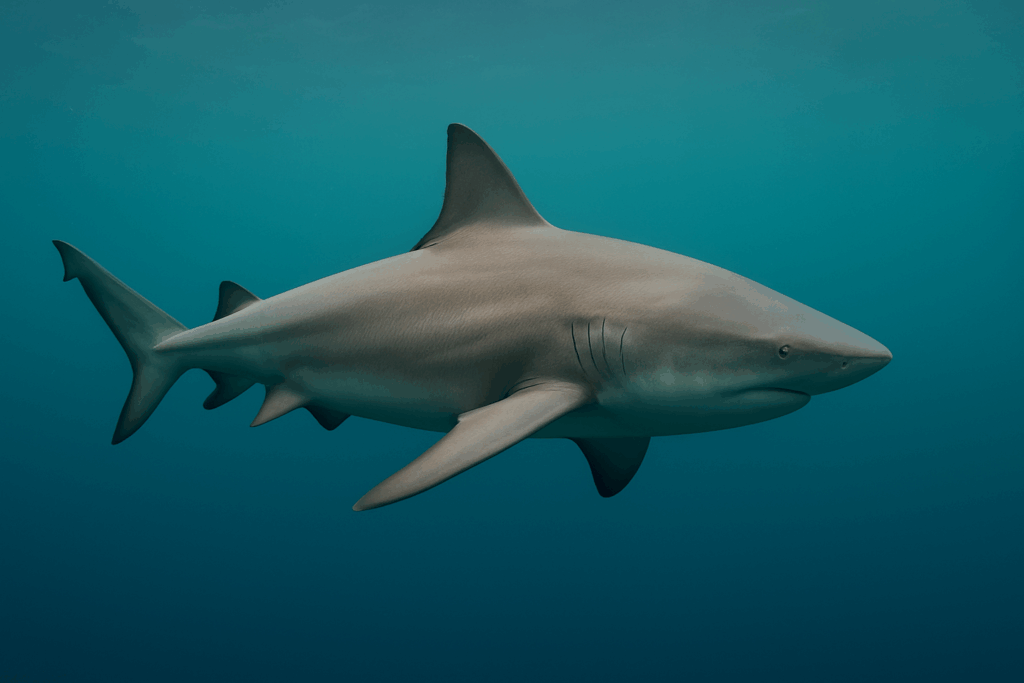
Why Are They Called Zambezi Sharks?
In South Africa and parts of southern Africa, bull sharks are often called Zambezi sharks. The name comes from their remarkable ability to travel far upriver in freshwater systems such as the Zambezi River, where they have been recorded hundreds of kilometres from the sea.
Bull sharks are one of the very few large shark species able to survive in both saltwater and freshwater. Special physiological adaptations allow them to regulate salt levels in their bodies, enabling them to move between coastal oceans, estuaries, and rivers.
This unusual ability makes bull sharks one of the most adaptable and widespread large sharks in the world, and it is one of the reasons they are so successful along the KwaZulu-Natal coast and at Protea Banks.
Where Are Bull Sharks Found in South Africa?
Bull sharks are found primarily along the KwaZulu-Natal coast, particularly in:
- Warm, subtropical waters
- Areas with strong currents and abundant food
- Offshore reefs and coastal systems
The most famous place to dive with them is:
- Protea Banks — one of the world’s premier big-shark dive destinations
They are also a key species during the Sardine Run, when large numbers of predators follow the migrating shoals along the coast.
Bull Sharks at Protea Banks
Protea Banks is world-renowned for close, dramatic bull shark encounters.
Why bull sharks thrive here:
- Deep offshore reef structure
- Strong currents bringing nutrients and fish
- Seasonal baitfish movements
- Clean, blue-water conditions
Bull sharks at Protea Banks are often:
- Seen in groups
- Extremely curious and interactive
- Powerful and fast-moving
- Regular visitors on both baited and natural dives
Because of their confidence and speed, these dives are strictly for experienced divers and are conducted under very controlled conditions.
Best Time to See Bull Sharks
Bull sharks can be seen at Protea Banks for much of the year, but they are especially common during:
- Summer and autumn months
- The Sardine Run season, when they become one of the dominant predator species in the region
During Sardine Run conditions, bull sharks are often seen:
- Hunting
- Moving with other predators
- Participating in high-energy feeding activity
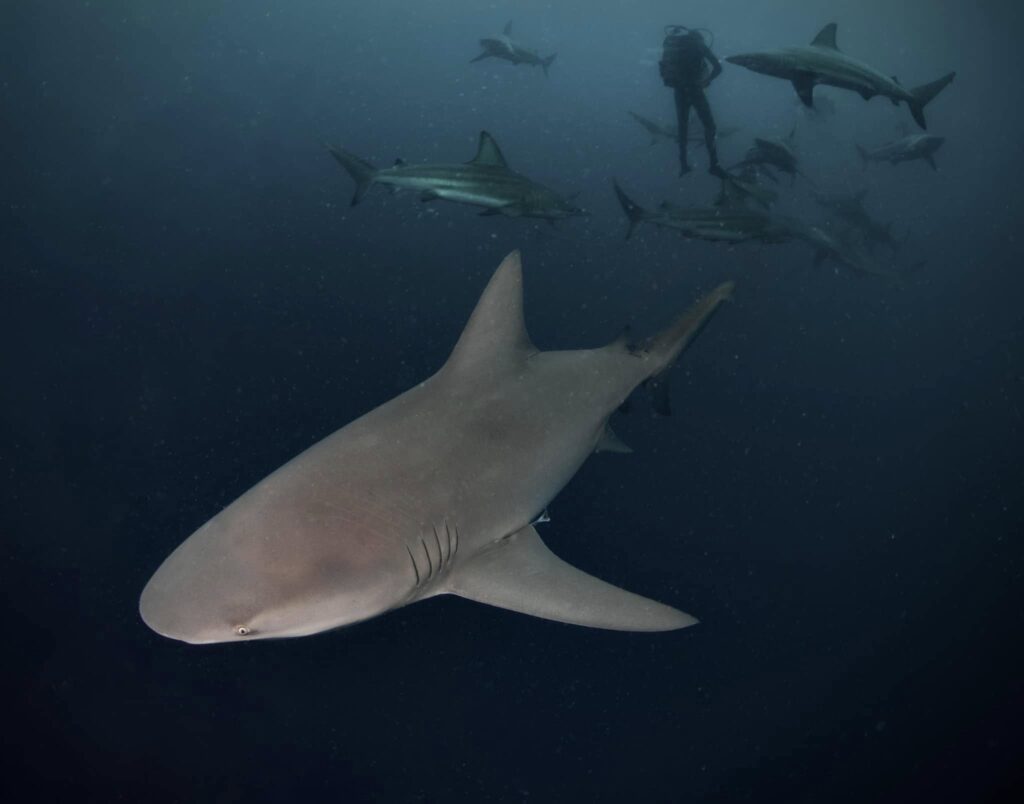
Why Bull Sharks at Protea Banks Are So Famous
Protea Banks is world-renowned for close, dramatic bull shark encounters. Located just offshore from the KwaZulu-Natal coast of South Africa, this deep reef system attracts large numbers of bull sharks due to its strong currents, rich marine life, and seasonal baitfish activity.
Bull sharks thrive here because of:
• Deep offshore reef structure
• Strong nutrient currents
• Seasonal baitfish migrations
• Clear blue-water diving conditions
Why are Bull Sharks Dangerous?
Bull sharks have a reputation as one of the most potentially dangerous shark species in the world — largely because:
- They are powerful
- They are confident
- They live in both coastal and river environments
- They often overlap with human activity
However, in professional diving operations:
- Behaviour is well understood
- Dives are tightly managed
- Procedures are strict
- Risk is extremely low
At Protea Banks, bull shark dives are:
- Carefully planned
- Conducted by highly experienced teams
- Only for suitably qualified divers
What It’s Like to Dive With Bull Sharks
Diving with bull sharks is:
- Intense
- Exhilarating
- Unforgettable
Divers often describe:
- The speed and power of their movements
- Their direct, confident approaches
- The feeling of being in the presence of a true ocean heavyweight
Bull sharks are not slow cruisers like tiger sharks — they are dynamic, fast, and highly aware of everything in the water.
Bull Shark Photography & Encounters
Bull sharks are a favourite subject for photographers because:
- They often approach closely
- They move through the scene repeatedly
- Their body shape and posture are very dramatic
- Group encounters create incredible wide-angle opportunities
Good situational awareness and excellent buoyancy control are essential when photographing bull sharks.
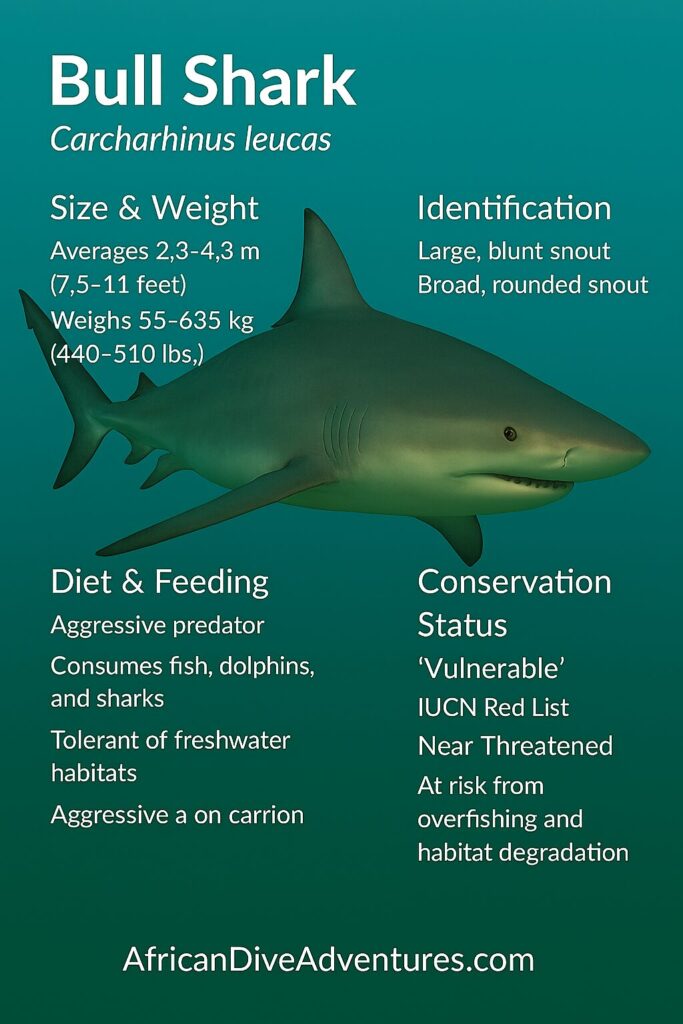
Average length: 2.4 – 3.5 m
Weight: 150 – 300 kg
Scientific name: Carcharhinus leucas
Habitat: Coastal waters, reefs, estuaries, rivers
Temperament: Confident and curious
Best place to dive with them in South Africa: Protea Banks
Bull Sharks and the Sardine Run
Bull sharks are one of the key predator species during the Sardine Run.
When billions of sardines move along the coast:
- Bull sharks follow
- Dolphins, game fish, and birds join
- Feeding events can become explosive and chaotic
This is one of the few times in the world where divers may witness bull sharks hunting in a full multi-species feeding frenzy.
Frequently Asked Questions About Bull Sharks
How big do bull sharks get?
Up to around 3.5 metres, sometimes larger.
Why are bull sharks considered dangerous?
Because of their power, confidence, and proximity to humans in coastal and river environments.
Do you need baited dives to see them?
Not always. They are frequently encountered naturally, especially during the Sardine Run.
What level of diver is required?
Advanced divers with experience in current, depth, and blue-water conditions.
Is Protea Banks suitable for beginners?
No. Protea Banks is an advanced dive destination.
Dive With Bull Sharks at Protea Banks
Protea Banks is one of the best places in the world to encounter bull sharks in their natural environment.
If you want to experience these powerful animals safely, responsibly, and with a professional team, Protea Banks should be at the top of your dive list.
