
Hammerhead Shark Diving South Africa
Protea Banks is a world-class, advanced-level shark diving site off the KwaZulu-Natal South Coast.
Hammerhead sharks are among the most instantly recognisable and fascinating sharks in the ocean. With their distinctive hammer-shaped heads and graceful schooling behaviour, they are a dream encounter for many divers.
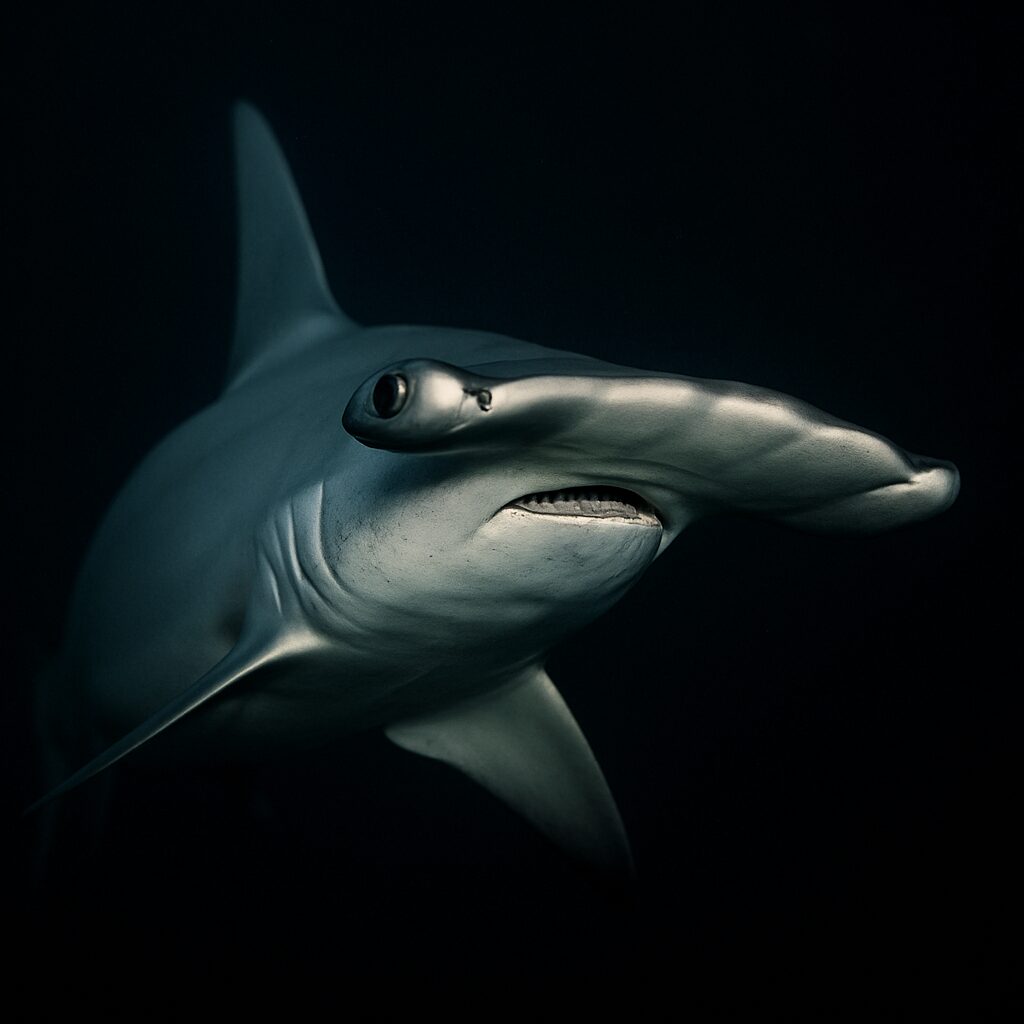
South Africa — and especially Protea Banks — is one of the best places in the world to see large schools of scalloped hammerhead sharks in their natural environment.
This guide explains everything you need to know about hammerhead sharks in South Africa, where to see them, when to dive, and what it’s really like to encounter these legendary ocean predators.
Explore a Protea Banks Hammerhead Shark in 3D
Rotate the Hammerhead Shark model to explore it in 3D or tap AR to place a life-size shark in your environment.
See a Hammerhead Shark in 3D Before You Dive
Rotate a life-size hammerhead shark and explore it before your Protea Banks dive.
Drag to rotate the shark. Tap the blue AR button on supported mobile devices to place a life-size shark in your room/space.
3D model licensed under Creative Commons Attribution (CC-BY) via Sketchfab.
This interactive shark experience is part of the African Dive Adventures™ platform.
WhatsApp to Check Availability →What Is a Hammerhead Shark?
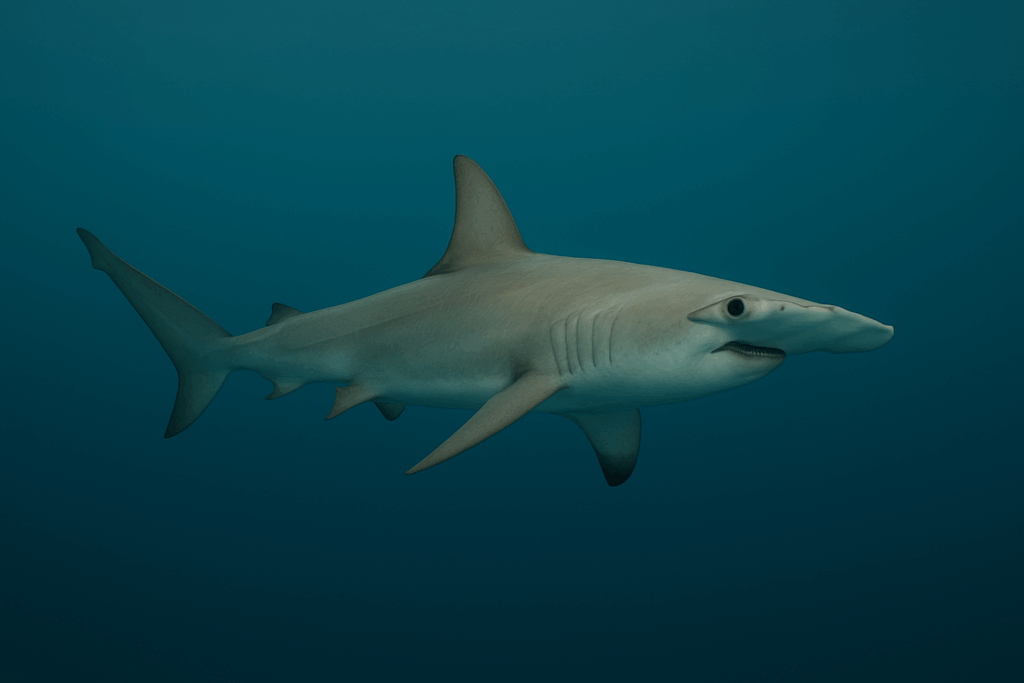
Hammerhead sharks belong to the genus Sphyrna. Several species exist, but the most commonly encountered species at Protea Banks is the:
- Scalloped hammerhead (Sphyrna lewini)
They are famous for:
- Their wide, flattened “hammer” shaped head (called a cephalofoil)
- Eyes positioned at the ends of the head for enhanced vision
- Excellent sensory systems for detecting prey
- Elegant, powerful swimming style
Large scalloped hammerheads can reach over 4 metres in length, making them one of the most impressive schooling sharks in the ocean.
Why Do Hammerheads Have That Shape?
The hammer-shaped head is not just for looks. It gives hammerheads:
- Better all-round vision
- Improved depth perception
- More space for electroreceptors used to detect prey
- Greater manoeuvrability in the water
This makes hammerheads highly efficient and specialised predators, especially when hunting rays and fish on the seabed.
Hammerhead Sharks at Protea Banks
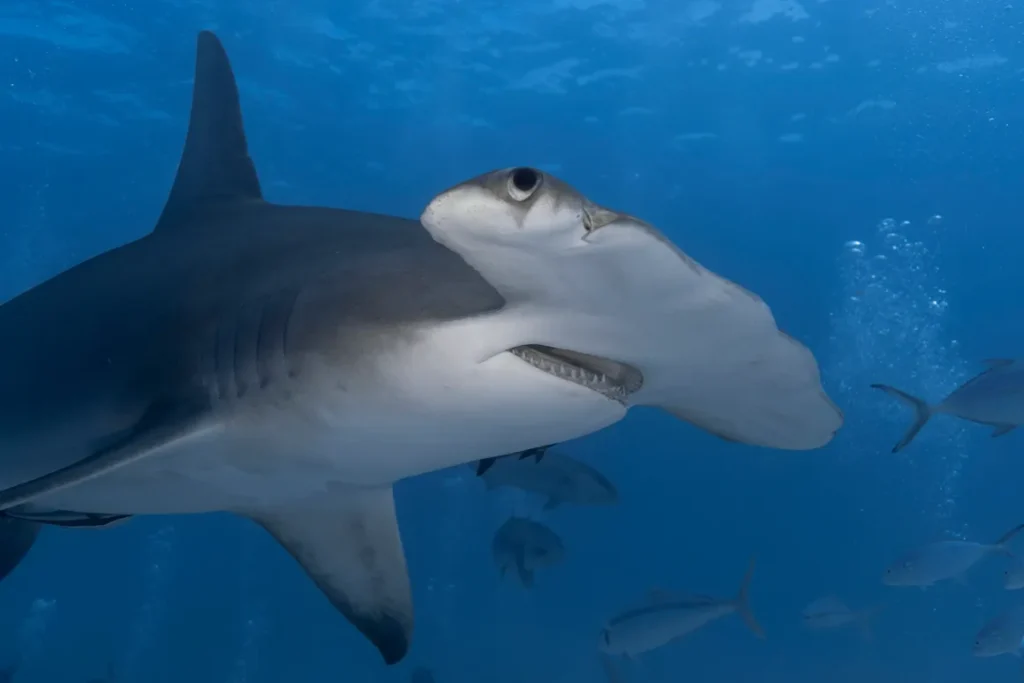
Protea Banks is legendary for massive schools of scalloped hammerhead sharks.
Why Protea Banks is so special for hammerheads:
- Deep reef systems close to the continental shelf
- Strong currents that concentrate nutrients and life
- Cooler upwelling water that hammerheads prefer
- Natural migration routes along the coast
Divers may encounter:
- Schools of dozens to hundreds of hammerheads
- Hammerheads cruising above the reef or in blue water
- Breathtaking formations moving like underwater clouds
These encounters are:
- Usually non-baited
- Natural and unpredictable
- Among the most spectacular shark dives in the world
Best Time to See Hammerhead Sharks
Hammerhead sightings at Protea Banks are seasonal.
General patterns:
- Best sightings are usually in winter and early spring
- Cooler water attracts larger schools
- Conditions vary year to year
During the Sardine Run season, hammerheads are often part of the broader predator movement along the coast, although they are not always directly involved in bait-ball feeding events.
Are Hammerhead Sharks Dangerous?
Hammerhead sharks are not aggressive toward divers.
They are:
- Shy
- Wary
- Easily disturbed
In fact, one of the biggest challenges of diving with hammerheads is:
Getting close enough before they disappear into the blue.
They are not known for threatening behaviour toward humans, and encounters are typically:
- Calm
- Distant
- Awe-inspiring
What It’s Like to Dive With Hammerhead Sharks
Seeing hammerheads is very different from seeing tiger or bull sharks.
Divers often describe:
- Watching entire schools appear out of the blue
- The slow, graceful movement of dozens of sharks at once
- The surreal feeling of being surrounded by moving silhouettes
- The frustration and excitement as they approach, turn, and vanish again
Hammerhead dives are:
- About patience
- Positioning
- Timing
- And a bit of luck
Hammerhead Shark Photography & Encounters
Hammerheads are:
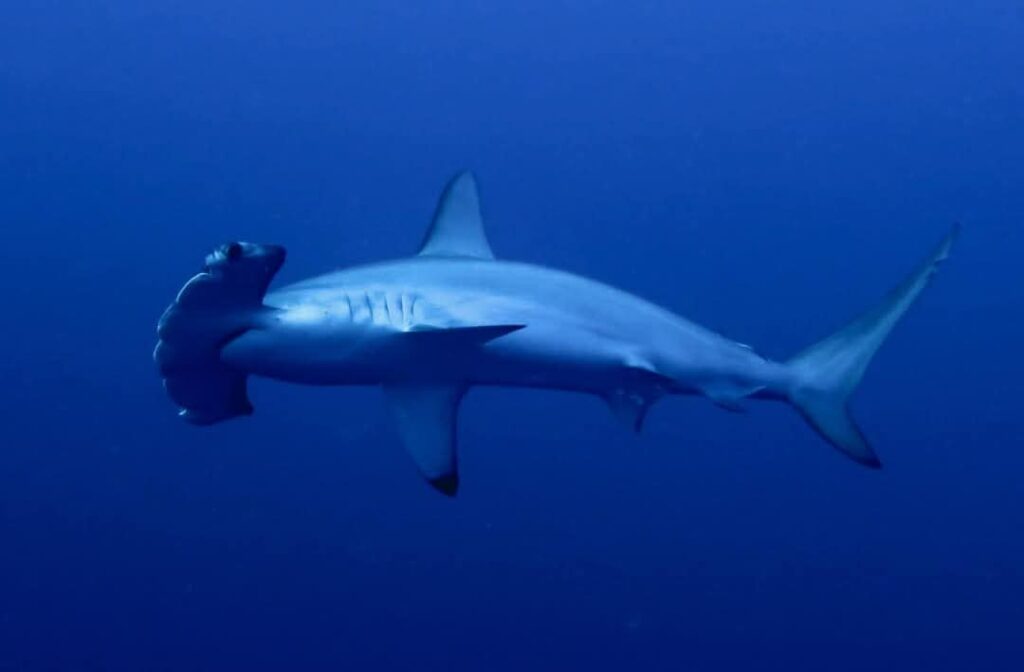
- Challenging but rewarding photography subjects
- Often seen at a distance
- Best suited to wide-angle lenses
Because they are shy:
- Good dive positioning is critical
- Chasing them never works
- Remaining calm and still gives the best chance of close passes
When a large school comes close, the result can be once-in-a-lifetime images.
Hammerhead Sharks and the Sardine Run
During the winter months, the Sardine Run creates a massive movement of marine life along South Africa’s east coast.
Hammerheads:
- Are part of the broader predator ecosystem
- May be seen moving along the coast during this period
- Are more associated with migration and aggregation behaviour than with bait-ball feeding itself
Why Dive Protea Banks for Hammerhead Sharks?
Frequently Asked Questions About Hammerhead Sharks
How big do hammerhead sharks get?
Scalloped hammerheads can reach over 4 metres in length.
Do hammerheads attack humans?
They are not considered dangerous to divers and are generally shy and cautious.
Are hammerhead dives baited?
No. Hammerhead encounters at Protea Banks are typically completely natural.
What level of diver is required?
Advanced divers with experience in deep, current-affected, blue-water conditions.
Is Protea Banks suitable for beginners?
No. Protea Banks is an advanced dive destination.
Dive With Hammerhead Sharks at Protea Banks
Protea Banks is one of the best places in the world to witness schools of hammerhead sharks in the wild.
If you want to experience these incredible animals in their natural environment, Protea Banks should be high on your diving wish list.
For more scientific information on hammerhead sharks, see IUCN Red List .
👉 View Protea Banks Dive Packages
